
Beads Out Level 533 Guide
Beads Out Level 533 looks open at first, but the run only becomes safe after you lock one reliable transfer lane. Mirror the first 5 moves from the video, pause at the checkpoint near move 13, and do not spend your last bailout lane before the final 13 moves.
Think of Level 533 as a routing test around tight destination capacity in the central lanes. In the master ladder tier, consistency is driven by deterministic final execution, so stabilize before every aggressive push.
For this stage, the most reliable pattern is a three-phase flow: stabilize the opening, control the midgame transfer order, and finish with a strict cleanup sequence.
Opening Plan
Fix top congestion first so lower conversions remain predictable. Hold this plan through move 7. If this part is messy, restart early.
Timing Cue
Separate traffic management from finishing moves. Re-check lane ownership around move 13. This is where consistency beats speed.
Phase 1
Fix top congestion first so lower conversions remain predictable. Hold this plan through move 7. If this part is messy, restart early. This is your opening anchor for Level 533. If this phase is stable, the remaining route is much easier to control.
Phase 2
Separate traffic management from finishing moves. Re-check lane ownership around move 13. This is where consistency beats speed. Treat this as the rhythm checkpoint. Keep transfers steady here to avoid midgame lockups.
Phase 3
Keep cleanup directional; avoid late reversals. Keep this active in the last 13 moves. Keep this order even when alternatives look tempting. This is your finishing control layer. Apply it after the main stacks are stable to clean residual beads with less risk.
- • Fix top congestion first so lower conversions remain predictable. Hold this plan through move 7. If this part is messy, restart early.
- • Separate traffic management from finishing moves. Re-check lane ownership around move 13. This is where consistency beats speed.
- • Keep cleanup directional; avoid late reversals. Keep this active in the last 13 moves. Keep this order even when alternatives look tempting.
- • Common trap: mixing setup and cleanup in the same cycle. The board looks cleaner briefly, but recovery options disappear. If this happens, pause and reset to the previous stable board shape instead of improvising extra moves.
- • Secondary trap: forcing long chains with no bailout action. Checkpoint comparison catches it early. If this happens, pause and reset to the previous stable board shape instead of improvising extra moves.
Solve center traffic first, then side details. For Level 533, keep the opener unchanged for two full attempts before altering only one transition action.
- • Step 1: replay your opening and verify first-route stability.
- • Step 2: compare midgame transfer order with the walkthrough.
- • Step 3: keep one final correction move for endgame cleanup.
Adjacent Levels

The hardest part of Beads Out Level 531 is the opening discipline, not the final cleanup. Mirror the first 7 moves from the video, pause at the checkpoint near move 12, and do not spend your last bailout lane before the final 8 moves.
In Beads Out Level 532, several early moves look playable, but only one opener keeps the middle phase stable. If you keep the early route intact through move 4, re-check capacity around move 10, and save a cleanup move for the last 12 moves, the ending is much more controlled.
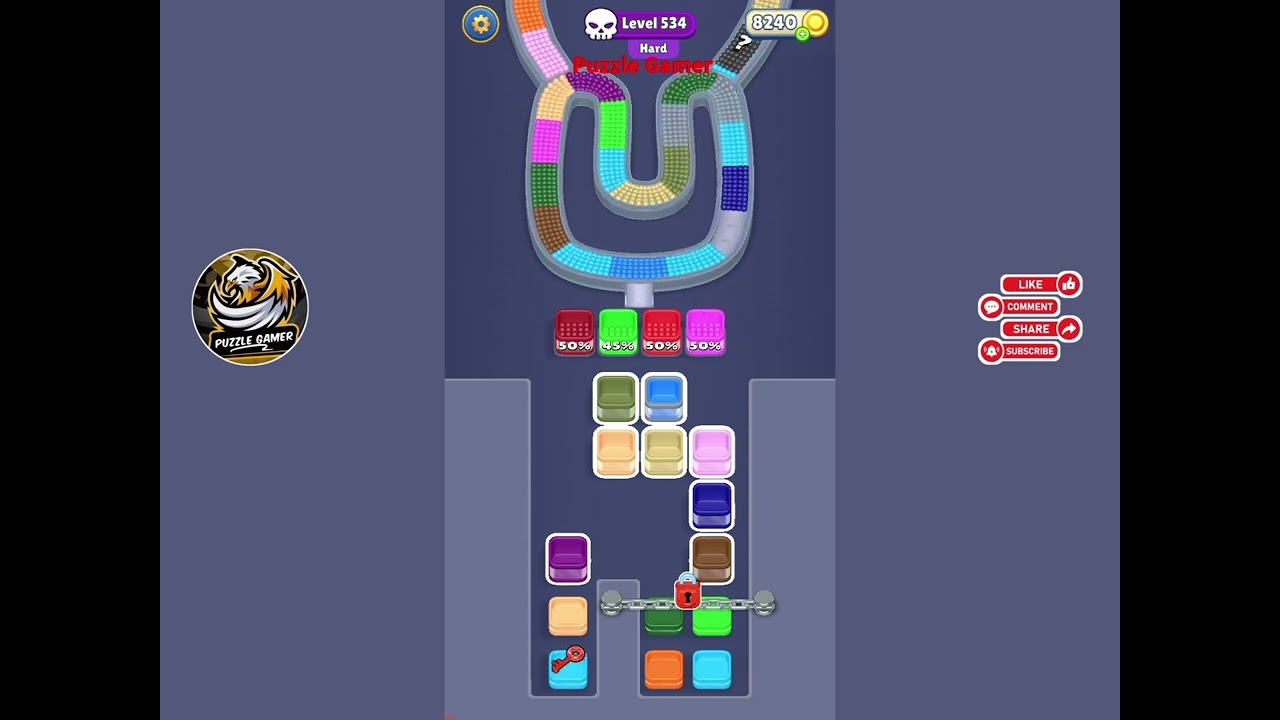
Beads Out Level 534 becomes much easier once you stop chasing quick merges and start protecting structure. Mirror the first 6 moves from the video, pause at the checkpoint near move 15, and do not spend your last bailout lane before the final 8 moves.

Beads Out Level 535 is not really about raw speed; it is about keeping the board recoverable while you build the first clean route. If you keep the early route intact through move 7, re-check capacity around move 13, and save a cleanup move for the last 10 moves, the ending is much more controlled.
Share Beads Out Level 533 Guide
Help other players by sharing this walkthrough page.