
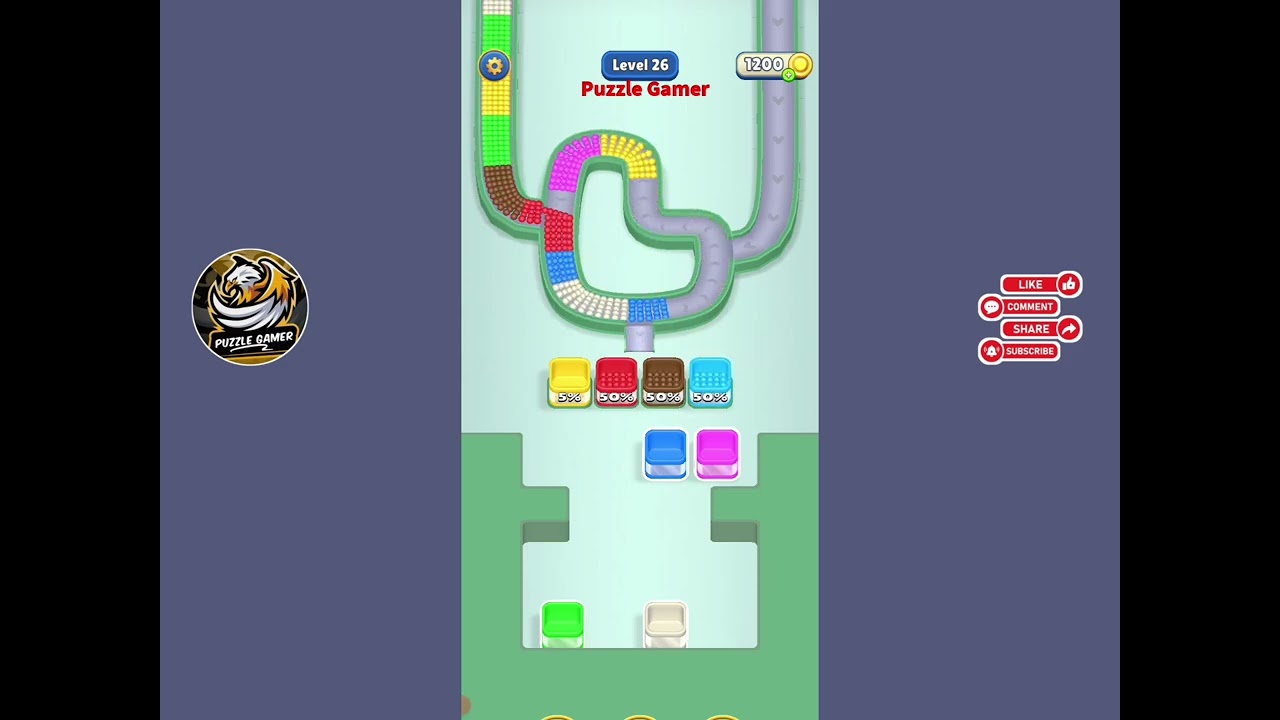
Beads Out Level 28 Guide
Level 28 is a fast sequence check. Pre-planned taps outperform improvisation.
Level 28 is a fast sequence check. Pre-planned taps outperform improvisation.
For this stage, the most reliable pattern is a three-phase flow: stabilize the opening, control the midgame transfer order, and finish with a strict cleanup sequence.
Opening Plan
Decide your first three moves before starting execution.
Timing Cue
Use short repeatable transfers instead of long risky chains.
Phase 1
Decide your first three moves before starting execution. This is your opening anchor for Level 28. If this phase is stable, the remaining route is much easier to control.
Phase 2
Use short repeatable transfers instead of long risky chains. Treat this as the rhythm checkpoint. Keep transfers steady here to avoid midgame lockups.
Phase 3
Keep one recovery lane for late correction. This is your finishing control layer. Apply it after the main stacks are stable to clean residual beads with less risk.
- • Decide your first three moves before starting execution.
- • Use short repeatable transfers instead of long risky chains.
- • Keep one recovery lane for late correction.
- • Reacting in real time without a fixed opening script. If this happens, pause and reset to the previous stable board shape instead of improvising extra moves.
- • Burning the recovery lane in midgame. If this happens, pause and reset to the previous stable board shape instead of improvising extra moves.
If speed pressure causes errors, slow down and enforce the same three-move opener each run.
- • Step 1: replay your opening and verify first-route stability.
- • Step 2: compare midgame transfer order with the walkthrough.
- • Step 3: keep one final correction move for endgame cleanup.
Adjacent Levels



Share Beads Out Level 28 Guide
Help other players by sharing this walkthrough page.