
Beads Out Level 363 Guide
Level 363 punishes rushed choices because of tight destination capacity in the central lanes. In this endgame ladder segment, keep focus on lock-break ordering and protect solved lanes from being reused as storage.
Level 363 punishes rushed choices because of tight destination capacity in the central lanes. In this endgame ladder segment, keep focus on lock-break ordering and protect solved lanes from being reused as storage.
For this stage, the most reliable pattern is a three-phase flow: stabilize the opening, control the midgame transfer order, and finish with a strict cleanup sequence.
Opening Plan
Delay side-branch activation until the main lane has a clear return path. Hold this plan through move 7. This is the safest way to enter midgame.
Timing Cue
Advance only when both source and target remain recoverable. Re-check lane ownership around move 15. Your checkpoint shape should stay recognizable here.
Phase 1
Delay side-branch activation until the main lane has a clear return path. Hold this plan through move 7. This is the safest way to enter midgame. This is your opening anchor for Level 363. If this phase is stable, the remaining route is much easier to control.
Phase 2
Advance only when both source and target remain recoverable. Re-check lane ownership around move 15. Your checkpoint shape should stay recognizable here. Treat this as the rhythm checkpoint. Keep transfers steady here to avoid midgame lockups.
Phase 3
Protect anchor columns until every loose bead has an exit. Keep this active in the last 11 moves. It protects the board from late traffic spikes. This is your finishing control layer. Apply it after the main stacks are stable to clean residual beads with less risk.
- • Delay side-branch activation until the main lane has a clear return path. Hold this plan through move 7. This is the safest way to enter midgame.
- • Advance only when both source and target remain recoverable. Re-check lane ownership around move 15. Your checkpoint shape should stay recognizable here.
- • Protect anchor columns until every loose bead has an exit. Keep this active in the last 11 moves. It protects the board from late traffic spikes.
- • Common trap: breaking a stable anchor stack for a short-term gain. It usually creates a fake advantage and collapses two turns later. If this happens, pause and reset to the previous stable board shape instead of improvising extra moves.
- • Secondary trap: switching branches before the primary lane stabilizes. The board looks cleaner briefly, but recovery options disappear. If this happens, pause and reset to the previous stable board shape instead of improvising extra moves.
Replace long chains with smaller deterministic transfer blocks. For Level 363, keep the opener unchanged for two full attempts before altering only one transition action.
- • Step 1: replay your opening and verify first-route stability.
- • Step 2: compare midgame transfer order with the walkthrough.
- • Step 3: keep one final correction move for endgame cleanup.
Adjacent Levels
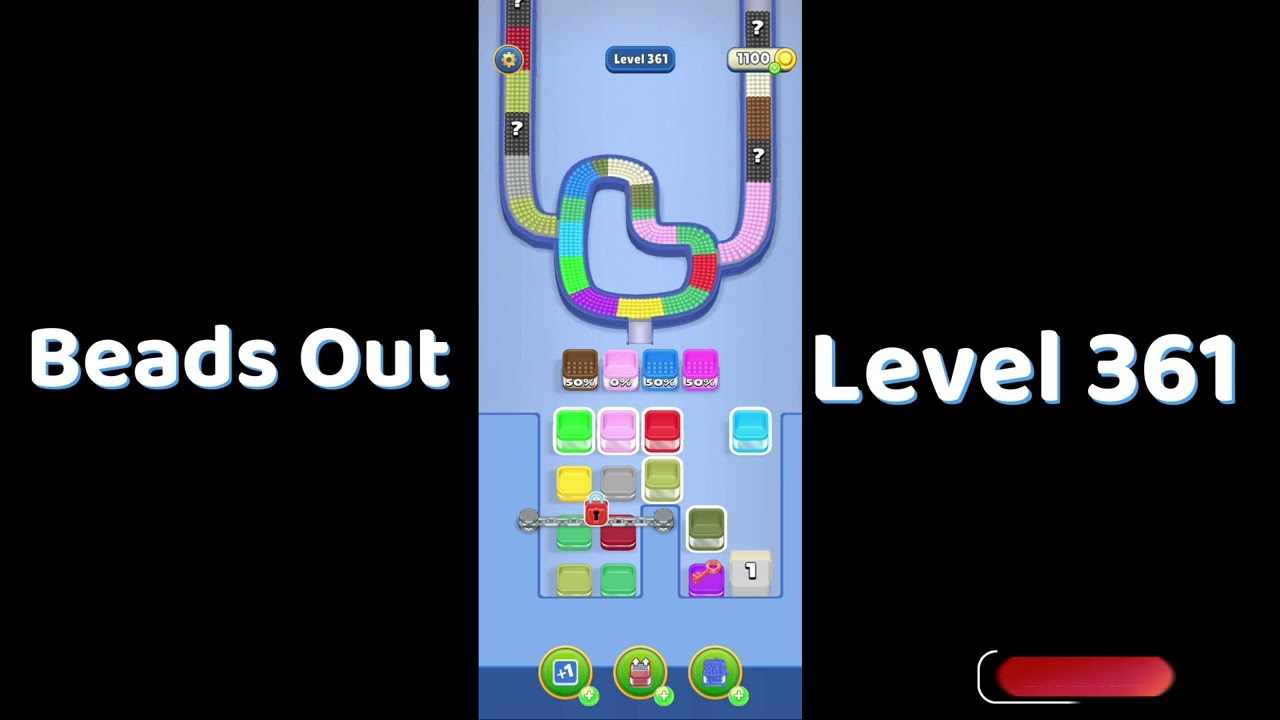
Share Beads Out Level 363 Guide
Help other players by sharing this walkthrough page.